

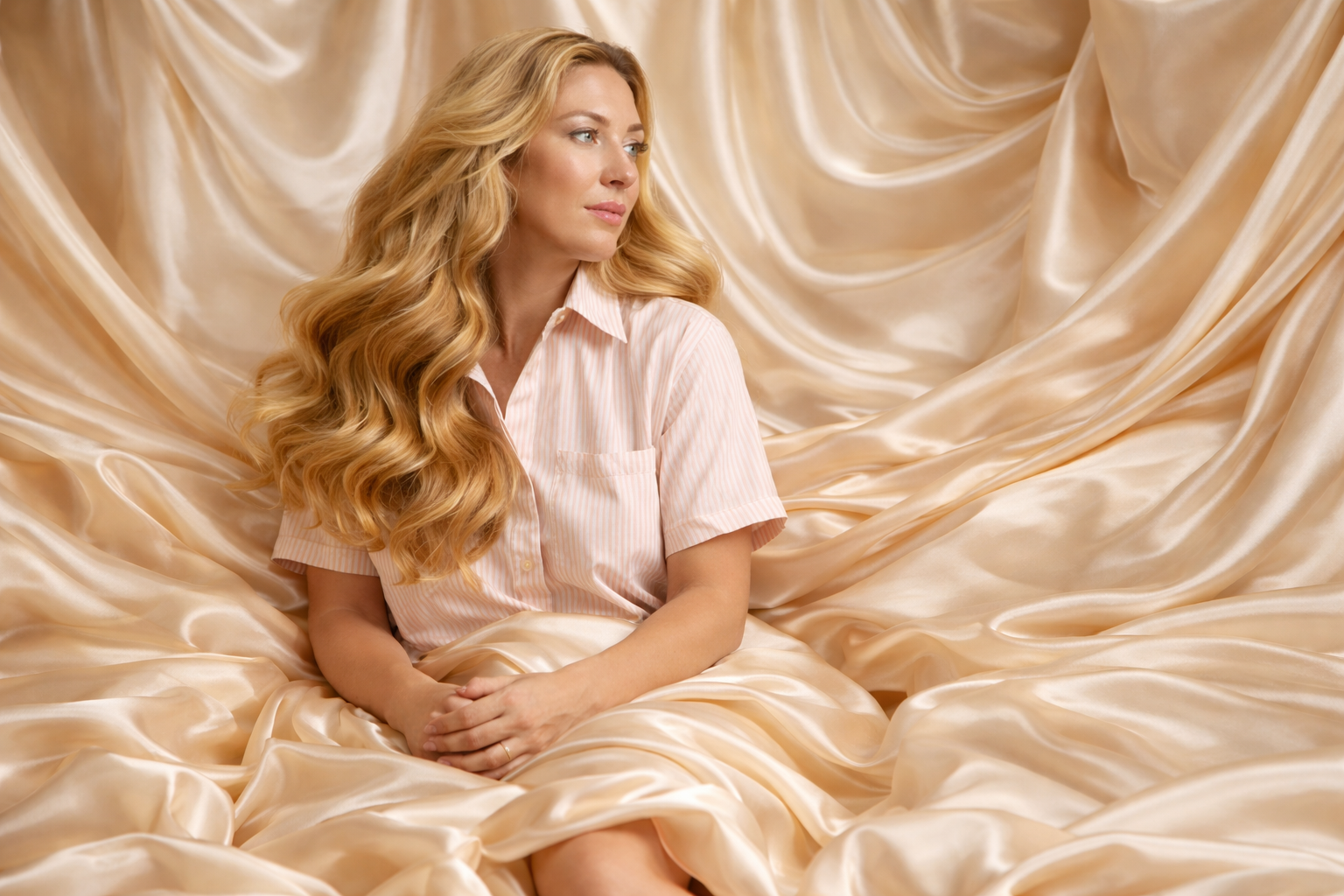
Silk is often associated with luxury.
But when it comes to protecting hair, the real reason silk matters has very little to do with glamour and everything to do with science.
Hair damage is often caused by repeated friction, tension, and moisture imbalance. And when you ride regularly, your hair experiences all three.
That’s why silk has become one of the most recommended materials in haircare products like pillowcases, bonnets, scrunchies, and now helmet inserts.
“Silk’s smooth surface helps reduce friction on the hair, which can reduce tangles, frizz and breakage.”
To understand why silk works so well, it helps to understand what silk actually is.
What is silk made of?
Silk is a natural protein fibre produced by silkworms.
The fibre itself is made primarily from a protein called fibroin, which forms the core structure of silk. Fibroin is what gives silk its strength while still allowing it to remain incredibly smooth and lightweight.
The silk fibre is originally coated with another substance called sericin, which acts like a natural glue holding the fibres together. During processing, much of the sericin is removed, leaving behind the smooth fibroin strands that give silk its signature soft texture and sheen.
This unique structure is part of what makes silk so gentle when it comes into contact with hair.
Why is silk kinder to the hair?
Silk fibres have an extremely smooth surface, which means they create less resistance when hair moves across them.
Instead of gripping or pulling on the hair shaft, silk allows strands to glide more easily.
That smoother interaction helps reduce:
- Friction against the hair cuticle
- Stress placed on fragile strands
- Tangling during movement
This is why silk has become widely used in haircare products designed to help protect hair overnight or during activities where friction is common.
Why friction matters.
Healthy hair is protected by an outer layer called the cuticle.
The cuticle is made up of overlapping cells that lie flat when the hair is healthy. When these layers stay smooth, hair appears shinier and is less prone to tangling or breakage.
But friction can disrupt this structure.
If you’d like to understand this process in more detail, you can read our full article on
Why helmet hair isn’t just frizz. It’s friction.
Breathability & moisture
Another important property of silk is its ability to remain lightweight and breathable. When wearing a helmet for extended periods, heat and humidity can build up quickly. Materials that trap moisture can leave hair feeling damp or uncomfortable.
Silk fibres allow air to circulate more easily, helping create a more balanced environment around the hair and scalp.
Silk also tends to absorb less moisture from the hair compared to some fabrics, meaning it is less likely to strip away the natural oils that help keep hair healthy.